
A Front Yard Vegetable Garden Amongst The Weeds
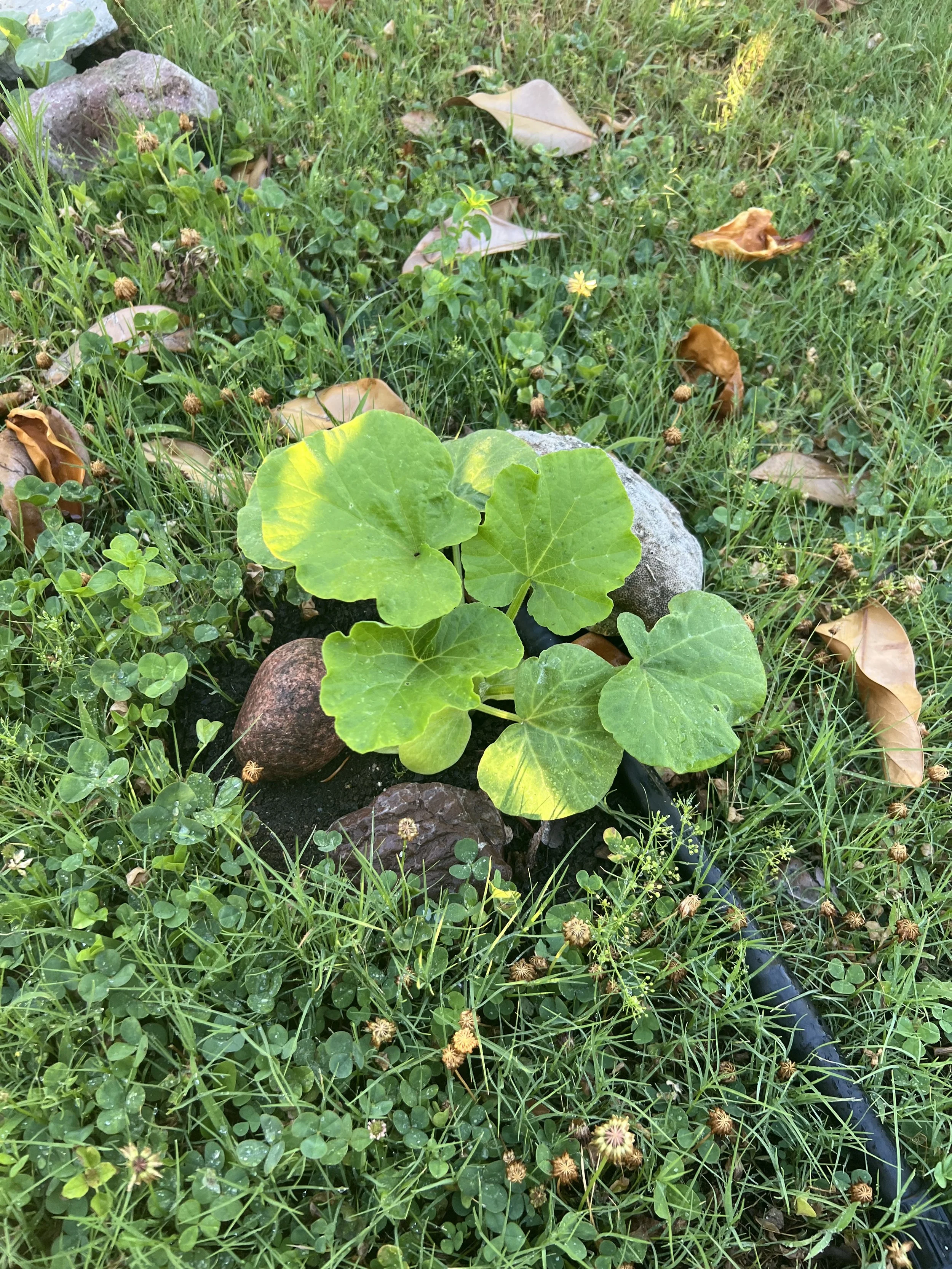
I’m highly skeptical of anyone making any claims related to gardening or farming. One of these things I am skeptical of is that weeds are going to somehow kill the plants you are trying to grow. Weeds are just like any other plant. They’re literally a plant you don’t want growing in an area you have deemed should be the area where those plants don’t belong.
If you know anything about ecology, then you know that plants are constantly trying to cover the Earth. It’s because bare soil hardly exists in natural ecosystems. Even in hot, arid climates there are crusts of bacteria that cover the soil so that they don’t blow away in the wind. That’s all these so-called weeds are trying to do. Keep the soil ecosystem from blowing away or bake away in the sun.
We also know that tilling is not so great for the soil. It destroys fungal networks and earthworm habitat. You could probably get away with one initial tilling of the soil when starting a garden but that’s about the only time you should do such a thing. I had this idea that maybe I didn’t need to till and maybe I didn’t need to be so freaked out about the weeds growing. As you can see in the picture above, a lot of these weeds are clover, which fix nitrogen. I’ve also got Bermuda grass and some others like dandelions and even oregano!
I thought—what if I just give my crop a little head start to sprout and grow above the weeds to that they have plenty of light. As you can see, they have a drip line directly on their root zone, so they have plenty of water. I thought back to when I managed a farm in Hawai’i and all the cow patties I would see fertilizing the lush pastures. What if I created my own kind of cow patty with some compost and just laid an inch or so of it directly on top of the weedy lawn? Would the seeds sprout and grow?
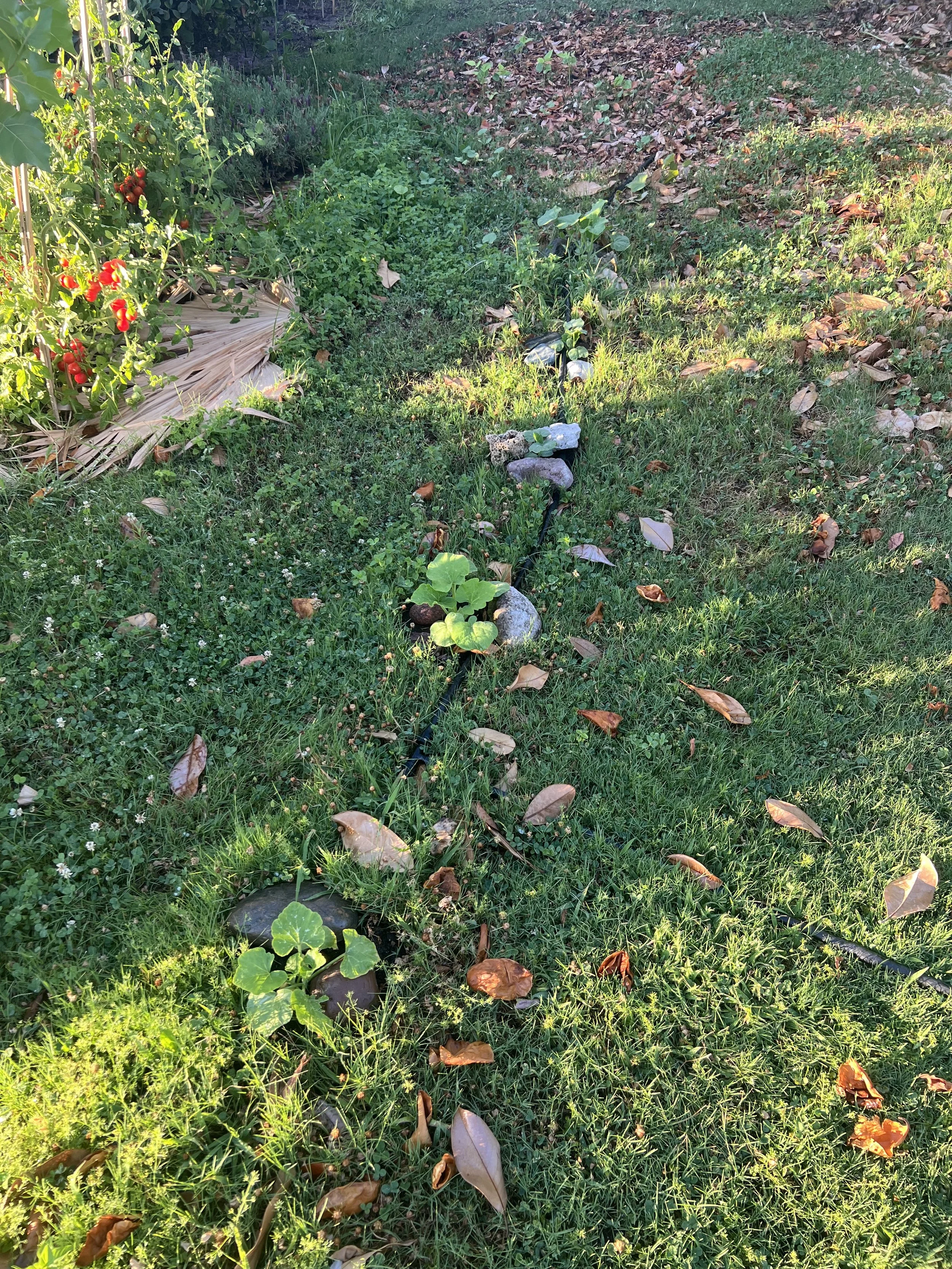
I wanted to add an inch of composted cow manure because multiple sources state that one inch of compost is all you need for fertility per year. I thought maybe that one inch is enough to get some plants started so they can outcompete the other existing plants in the lawn. I spaced each patty about two feet from each other and then I planted some Koginut squash seeds—from Row 7—and let Nature do the rest. The drip lines are hooked up to the pulse cycle, so the seeds would get 2 minutes of water 6 times a day. The compost patties stayed moist and then the seeds eventually sprouted.
It took several days for the seeds to sprout and yet the grass and other plants still hadn’t poked through the compost patties. As of now, the grass is starting to make its way though, however, the squash are big enough already that they have a fighting chance. I think these plants will give me a good harvest because they have light, nutrients, and water. It doesn’t matter that there are other plants growing around them.
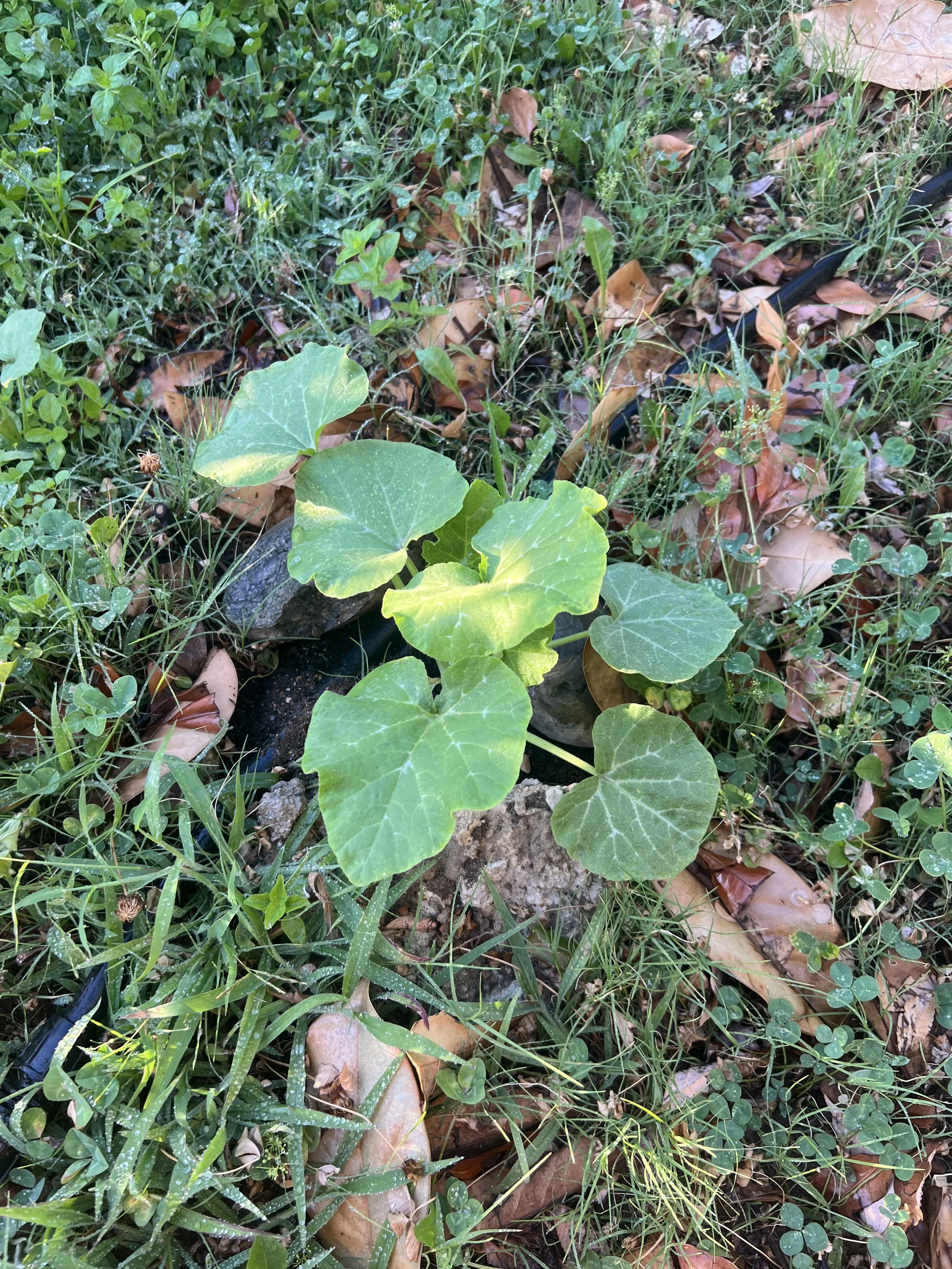
Just this past week, I gave the squash each about a tablespoon of complete organic fertilizer (COF). In a couple of weeks, it should start releasing slowly more nutrients to the squash plants. I’ll give each plant a dose of COF once a month. The only time I will try to control the weeds is if they start growing over the squash plants and blocking out the light. Otherwise, I’ll pretty much do nothing.
I’ll post an update when I harvest.
